


Identification of the feature space of immersion of the decisionmaker – the basis of the subject-oriented approach to the study of complex objects
https://doi.org/10.46973/0201-727X_2025_1_133
Abstract
The problem of making non-trivial decisions taking into account the temperament and psycho-emotional status of the decision maker has been formulated. This required clarification and expansion of the categorical apparatus of the study. In particular, the concepts of subject-independent and subject-dependent feature spaces have been studied. Bioinspired methods of decision making, the basic model of which is finite state machines, have been analyzed. The concept of "finite state machines with a preferential direction of transitions" has been introduced. A mechanism for identifying the feature space (FS) of the researcher has been developed, including: selection of the type of proximity measure, an algorithm for calculating the proximity measure. A scheme for training a teacher and a machine has been proposed. The possibility of immersing finite state machines in a subject-dependent feature space has been shown. Research prospects and illustrative examples are given.
About the Authors
N. N. Lyabakh
Maikop State Technological University (MSTU)
Russian Federation
Russian Federation
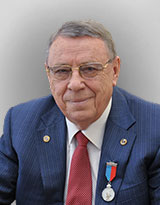
Lyabakh Nikolay Nikolaevich, Scientific Director of “Research Center for Digital, Intelligent and Innovative Technologies”, Doctor of Engineering Sciences, Professor
D. M. Inukhova
Maikop State Technological University (MSTU)
Russian Federation
Russian Federation
Inukhova Dzhaneta Muratovna, Postgraduate Student
References
1. Goryainov, A. V. Regression factor models for risk assessment in railway transport / A. V. Goryainov, Yu. S. Kan, E. N. Platonov // Proceedings and plenary reports of the participants of the UKI’12 conference. – Moscow : IPU RAS, 2012. – P. 314–320. – ISBN 978-5- 91450100-3.
2. Mathematical methods in organizing transport processes : guidelines for the section "Linear programming" of the disciplines "Mathematical methods in organizing transport processes", "Mathematical modeling" for all forms of training and areas of training / compiled by Yu. A. Zakharova. – Nizhnevartovsk, 2023. – 34 p.
3. Kudryashov, M. A. Cluster analysis of routes of a new model for managing ground-based urban public passenger transport / M. A. Kudryashov, R. S. Airiyev, G. M. Ovnanyan // World of Transport and Transportation. – 2019. – Vol. 17, No. 4. – P. 182–195. – ISSN 1992-3252.
4. Lyabakh, N. N. Technical cybernetics in railway transport : textbook / N. N. Lyabakh, A. N. Shabelnikov. – Rostov-on-Don : SKNC VSh, 2002. – 232 p. – ISSN 1560-3644.
5. Intriligator, M. Mathematical methods of optimization and economic theory / M. Intriligator. – Moscow : Iris-Press, 2002. – 564 p. – ISBN 5- 8112-0042-0.
6. Kotenko, I. V. Analysis of bioinspired approaches to protecting computer systems and networks / I. V. Kotenko, A. V. Shorov, F. G. Nesteruk // Proceedings of SPIIRAS. – Moscow, 2011. – No. 3 (18). – P. 19–73.
7. Animal Algorithms: which representatives of the animal world inspired researchers to create algorithms. – URL: habr.com/ru/companies/rshb/articles/749930 (date of access: 03/01/2025).
8. Rosenberg, I. N. Control systems for sorting processes within the framework of the digital railway ideology: monograph / I. N. Rosenberg, A. N. Shabelnikov, N. N. Lyabakh ; Russian Academy of Sciences, VINITI RAS. – Moscow : VINITI RAS, 2019. – 243 p. – ISBN 978-5- 902928-82-9.
9. Penskoy, A. V. Classical differential geometry / A. V. Penskoy. – URL: https://teachin.ru/file/synopsis/pdf/kdg-seminars-penskoyMK.pdf?ysclid=m7fxqw6a4i66147865 (date of access: 02/22/2025).
10. Mateus, P. On the complexity of minimizing probabilistic and quantum automata / P. Mateus, D. Qiu, L. Li // Information and Computation. – 2012. – Vol. 218. – P. 36–53.
11. Abstract Probabilistic Automata / B. Delahaye, J.-P. Katoen, K. G. Larsen [et al.] // Information and Computation. – 2013. – Vol. 232. – P. 66–116.
Review
For citations:
Lyabakh N.N., Inukhova D.M. Identification of the feature space of immersion of the decisionmaker – the basis of the subject-oriented approach to the study of complex objects. Vestnik Rostovskogo gosudarstvennogo universiteta putej soobŝeniâ. 2025;(1):133-140. (In Russ.) https://doi.org/10.46973/0201-727X_2025_1_133
Views:
82
JATS XML





 Email this article